Bucharest Metropolitan Area Intercommunity Development Association Concludes Green-Tex Project: 50 Tonnes of Textiles Collected and Recycled in Ilfov
- Project closing conference takes place on Wednesday, June 17

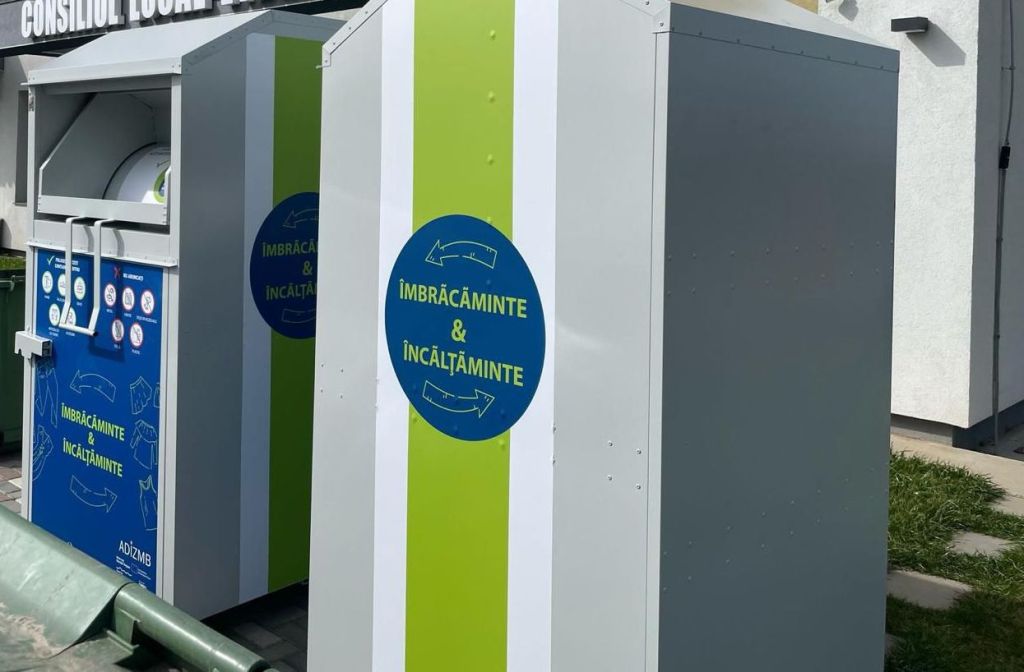
Fifty tonnes of used clothing, bed linen, footwear and other textile materials have been collected free of charge in five localities in Ilfov County, through 12 dedicated containers installed by the Bucharest Metropolitan Area Intercommunity Development Association (ADIZMB) as part of the transnational project „Enhancing Danube Green Textile and Garment Production and Consumption” — Green-Tex.
On Wednesday, June 17, ADIZMB will present the results of this innovative pilot during the conference „Sustainability in the Textile Industry — Enhancing Danube Green Textile and Garment Production and Consumption”, hosted at ARCUB – Hanul Gabroveni, starting at 10:30. The event marks the completion of the Green-Tex project, financed through the Danube Transnational Programme, which brought together 11 partner organisations from nine countries across the Danube region.
In the spring of 2025, ADIZMB implemented a pilot system for the separate collection of textile waste in five localities in Ilfov County: Berceni, Brănești, Pantelimon, Popești-Leordeni and Vidra. Through the 12 dedicated collection containers placed in accessible community locations, approximately 50 tonnes of textile waste were collected and redirected for sorting, reuse and recycling by the end of 2025.
“The project results demonstrate that adequate infrastructure, supported by citizen engagement and collaboration between public administration and the private sector, can make a significant contribution to reducing environmental impact and driving behavioural change at community level. The fact that Romania’s Ministry of Environment was an associated partner in Green-Tex project provides a direct channel to ensure that these results do not remain just a report – we will share the data and conclusions as input for the development of future national solutions for textile waste management,” said Gianina Pănătău, Director of ADIZMB.
According to the project data, citizens who used the dedicated collection containers contributed to a reduction of approximately 1,051 tonnes of CO₂ emissions, associated both with the production of new textile and footwear products and with the disposal of textile waste. They also helped save over 108,000 m³ of water, otherwise required for raw material cultivation and industrial production processes.
An analysis of the types of materials collected shows that clothing accounted for the largest share (37%), followed by household textiles — pillows, bed linen and similar items (28.5%), footwear (16.2%), curtains and drapes (9.1%), and items made from natural leather or fur (3%).
For more information about the project, please visit https://www.adizmb.ro/projects/enhancing-danube-green-textile-and-garment-production-and-consumption-green-tex/.
Article supported by Asociaţia de Dezvoltare Intercomunitară Zona Metropolitană Bucureşti